
1. Introduction: The “Second Chance” for Sakura Lovers
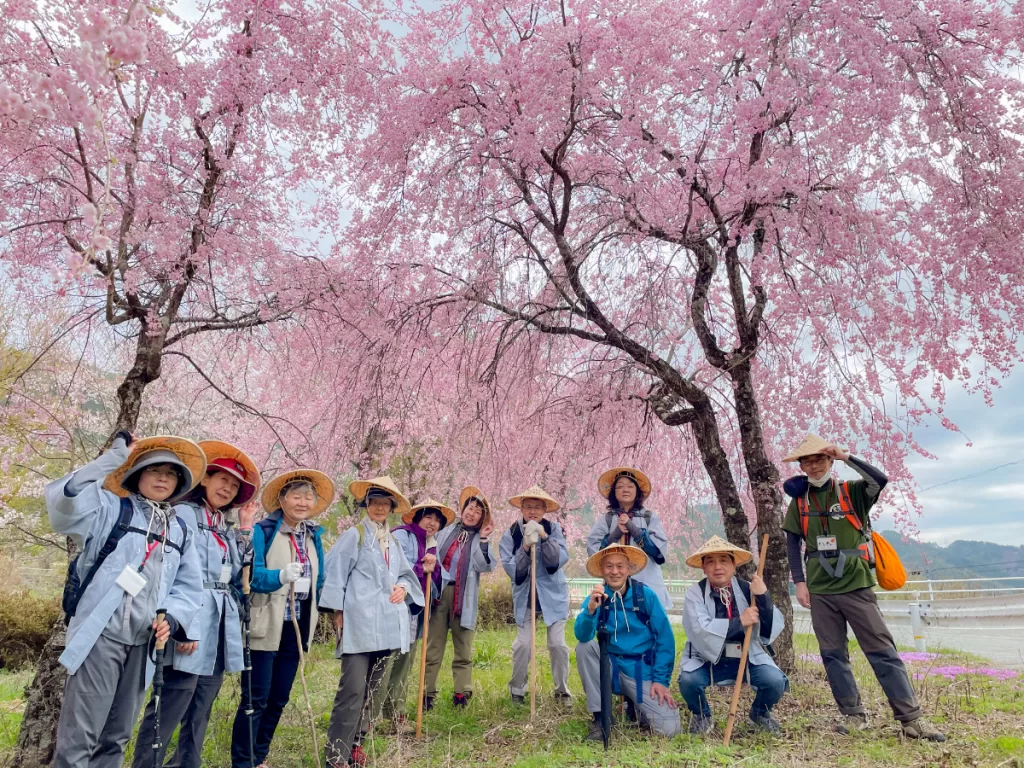
If you have arrived in Tokyo or Nagoya only to find the cherry blossoms already drifting to the ground in a “snow” of fallen petals, do not despair. You have not missed the season; you are simply in the wrong climate zone. Due to the unique geography of the Kiso Valley, the Nakasendo trail offers a “second chance” for travelers, with blossoms peaking weeks after the urban centers have turned to green.
This document serves as a meteorological and cultural roadmap. By synthesizing 10 years of longitudinal data with local microclimate physics, we provide the logic necessary to pinpoint the perfect visit window for Kiso’s alpine spring.
2. The Data: Comparing Kiso with Japan’s Major Cities
To forecast the Kiso Valley bloom, we must account for a lack of an official “specimen tree” (標本木) in Kiso-Fukushima. As a specialist, I use Nagano City as the nearest public meteorological reference point, adjusting for Kiso’s specific altitude of 750m. The following data illustrates the statistically consistent lag between the coastal urban heat islands and the interior mountains.
10-Year Sakura Data: Bloom and Full Bloom (2016–2025)
| Year | Tokyo (Bloom / Full) | Nagoya (Bloom / Full) | Nagano City* (Bloom / Full) |
|---|---|---|---|
| 2016 | Mar 21 / Mar 31 | Mar 19 / Mar 31 | Apr 03 / Apr 08 |
| 2017 | Mar 21 / Apr 02 | Mar 28 / Apr 06 | Apr 14 / Apr 17 |
| 2018 | Mar 17 / Mar 24 | Mar 19 / Mar 27 | Apr 02 / Apr 06 |
| 2019 | Mar 21 / Mar 27 | Mar 22 / Apr 04 | Apr 13 / Apr 18 |
| 2020 | Mar 14 / Mar 22 | Mar 22 / Apr 01 | Apr 02 / Apr 13 |
| 2021 | Mar 14 / Mar 22 | Mar 17 / Mar 28 | Mar 29 / Apr 01 |
| 2022 | Mar 20 / Mar 27 | Mar 22 / Mar 30 | Apr 09 / Apr 11 |
| 2023 | Mar 14 / Mar 22 | Mar 17 / Mar 27 | Mar 28 / Apr 03 |
| 2024 | Mar 29 / Apr 04 | Mar 28 / Apr 07 | Apr 08 / Apr 13 |
| 2025 | Mar 24 / Mar 30 | Mar 26 / Apr 04 | Apr 08 / Apr 13 |
*Nagano City (proxy) consistently mirrors the Kiso high-altitude timeline.
Understanding the Seasonal Lag
• Quantifiable Delay: The Kiso region blossoms an average of 17 days later than Tokyo and 14 days later than Nagoya.
• Predictive Buffer: When urban blossoms reach their final stage (leaf-sakura), the Kiso Valley is generally just entering its peak.
• Alpine Variability: Mountain regions are highly sensitive to “cold snaps.” While urban dates fluctuate by days, Kiso can fluctuate by weeks; note the late start in 2017 (April 14) compared to the early surge in 2021 (March 29).
3. The Science of the Late Bloom: Altitude and Microclimates
The “Physics of the Valley” dictates the timing of the bloom. Understanding these two principles allows travelers to “hack” the Japanese spring.
• The Altitude Rule: In meteorology, temperatures drop by approximately 0.6°C for every 100 meters of elevation. This creates a staggered timeline even within the valley itself.
• Accumulated Warmth (積算暖度): Sakura do not bloom based on a calendar; they bloom once they have filled a “warmth bank.” In March, the average temperature in Tokyo is 9.4°C, whereas Kiso-Fukushima (750m) averages a mere 3.5°C. This low “temperature floor” prevents heat accumulation, keeping the buds dormant long after the cities have turned pink.
• The Valley Microclimate: Kiso’s deep geography traps cold air and late-season weather. On April 15, 2025, a snowfall event occurred in the valley, a common occurrence that can temporarily pause the blooming process and preserve the blossoms longer than in the windy coastal plains.
4. The “Sakura Relay”: Timing Your Walk Along the Trail
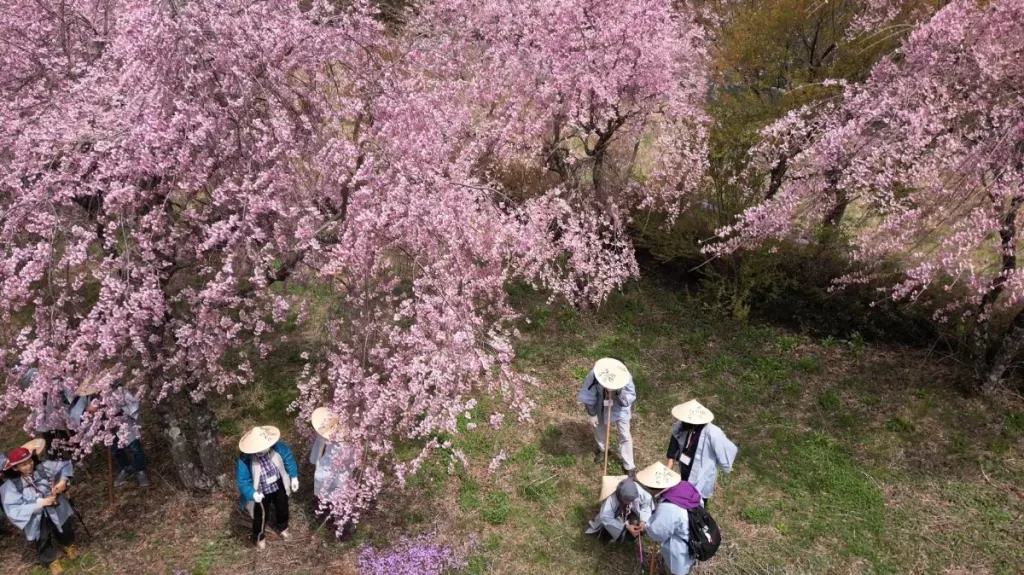
The Nakasendo does not bloom simultaneously. It is a “Sakura Relay” that climbs the mountain slopes from south to north.
1. Early April (The Openers): Tsumago-juku (430m) At this lower elevation, Tsumago is 1.9°C warmer than Kiso-Fukushima. It is the first major post town to bloom, typically peaking 7–10 days after Nagoya.
2. Mid-April (The Main Event): Kiso-Fukushima (750m) The cultural heart of the valley. Data from the Kiso Regional Official Blog recorded “best viewing” on April 12, 2022, and “full bloom” on April 18, 2025.
3. Late April (The Finale): Narai-juku (940m) As the highest post town, Narai sits nearly 200m higher than Kiso-Fukushima. This elevation gap creates an additional 1.1°C temperature drop, ensuring that Narai remains the final stronghold of spring in the valley, often peaking in the last week of April.
Expert Pro-Tip: If you arrive in very late April and find Narai’s blossoms falling, “chase the spring” further to the Kaida Plateau (1100m), where the altitude delay extends the season even further.
5. Spotlight: Kozenji Temple and the Legendary Shigure-zakura

For the data-driven traveler, Kozenji Temple in Kiso-Fukushima is the essential stop. It offers both historical weight and a reliable peak window.
• The Tree: The temple is famous for the Shigure-zakura (weeping cherry). This is the second-generation tree descended from an original planted by the warlord Kiso Yoshinaka. It statistically reaches full bloom between April 12 and April 18.
• The Temple Experience: Kozenji houses the “Kan-un-tei” (Cloud-viewing Garden), a dry landscape (枯山水, karesansui) masterpiece designed by the renowned Mirei Shigemori. As a Registered Monument, it offers a Zen atmosphere that remains tranquil even during peak season.
• Specialist Advice: Visit in the morning for soft, directional light on the weeping branches. Check locally for evening illuminations, which use light to emphasize the “weeping” silhouette against the dark mountain backdrop.
6. Practical Planning: Access and the “Three-Museum Pass”
Logistics in the Kiso Valley require precision to maximize your time.
• Travel Times: Kiso-Fukushima is 1 hour from Nagoya via the Limited Express Shinano and 3–4 hours from Tokyo.
• The 3-Museum Pass: For 900 yen, purchase the common ticket granting entry to Kozenji Temple, the Fukushima Checkpoint, and the Yamamura Daikan Yashiki. Crucially, this pass becomes available starting April 1, coinciding perfectly with the arrival of the “Second Chance” travelers.
• Suggested Itinerary:
◦ 1-Day Strategy: Focus on Kiso-Fukushima. Morning at Kozenji (Sakura + Garden), afternoon exploring the samurai history at the Checkpoint and Daikan Yashiki.
◦ 2-Day Strategy: Spend Day 1 in Fukushima. On Day 2, follow the “Relay” by hiking the 6.4km trail over Torii Pass to Narai-juku, moving from 750m to 940m to experience the change in bloom density.
7. Conclusion: Your 2025 Best-Viewing Window
By applying the “Altitude Rule” and monitoring the “Accumulated Warmth,” we can define the high-probability window for the 2025 season.
• Primary Core Window: Early to Mid-April (Centering on the second week of April).
• The “14-Day Rule”: Aim for a visit approximately 10 to 14 days after the reported full bloom in Nagoya.
• Strategic Execution: If your dates are fixed, “follow the altitude.” Start at Tsumago (430m) and move upward to Narai (940m) until you hit the peak.
• Real-Time Data: Because mountain weather is volatile, always verify current status via the Kiso Regional Official Blog or local tourism SNS before departing your base city.